Showing posts with label government. Show all posts

Thursday, August 28, 2008

Ferrous Bueller's Day Off

The City of Slidell has passed an ordinance banning the use of metal cladding all new building within the city limits.

Brick, stone, stucco and various other materials - but not metal - will be the standard for building exteriors in Slidell from this point forward, the City Council agreed this week.

The council voted 6-0 Tuesday to ban new metal construction.

Officials have said they want to minimize the presence of metal buildings in the city to keep it from becoming too industrial-looking.

In addition, residents have said at meetings where the city's master plan has been discussed that they want to improve the look along the city's main thoroughfares, and that means fewer metal buildings. The change to the zoning code calls for the entire exterior of buildings in commercial districts to be covered in brick, stone, architectural block, stucco, glass, wood, fiber-cement siding or vinyl siding, though vinyl siding would not be permitted for more than 25 percent of the total exterior walls.
The first question I have is, what should industrial buildings look like. My second question is; is the city council totally deranged? Don't answer that.

But seriously folks, they want to ban metal cladding for new buildings but allow vinyl siding? Yeech! I was hoping to have something more substantial to say about this, but that would be like having a serious discussion about Beavis and Butthead.

Wednesday, May 02, 2007

Day Late And Dollar $hort

According to some, Governor Kathleen Blanco's Road Home Program is going broke.

If the Road Home keeps paying out homeowner grants at the current rate -- and all the remaining applicants qualify for compensation -- the state aid program could be more than $3 billion short, state officials said.

"There's no question we're going to run out of money," said Sam Jones, Gov. Kathleen Blanco's liaison for the federally financed Road Home.

The problem is twofold:

-- For the first 10,000 grants, the program paid out nearly $750 million. That left about 120,000 applicants in the pipeline as of last week. If Road Home grants continue to average $75,000 per closing, the state is on track to spend $9.75 billion. Based on awards calculated for 68,000 applicants so far, the total payout could be even higher, more than $10 billion. The state received $10.4 billion in block grants from Congress, but the Louisiana Recovery Authority budgeted only $7.5 billion of that for the homeowner program.

-- The $7.5 billion the state budgeted is really only $6.3 billion because, at least for now, $1.14 billion the state was counting on getting from the Federal Emergency Management Agency's hazard mitigation grants is not yet released. FEMA has cited legal issues as the holdup on releasing the money, and Louisiana officials have complained about the delay for months.

A shortfall could be easy to understand because it is difficult to accurately forecast the award amounts and the exact number of applicants. What makes this most distressing is the unexpected way in which it came to light, mainly due to Governor Blanco's own statements.

Blanco responded to a letter from Jindal late Tuesday by accusing him of not supporting all of her efforts to increase federal money to Louisiana and for not acknowledging that the state got short shrift from last year's Republican Congress when compared with Republican-run Mississippi.

But Louisiana did get an additional $4.2 billion in block grants from Congress last July when state officials argued Louisiana's initial share of $6.2 billion was not enough. When the money came through, Blanco said at a news conference, "We have all the funding we need to run our full program."

Can you say, "Hey buddy, can you spare a dime."

Tuesday, April 10, 2007

A Former Carpetbaggers View

Tom Bethell has penned an article in The American magazine about the progress of rebuilding in New Orleans a former resident. Rather than comment on it, I prefer to highlight certain passages that I think are to the point of our current rebuilding process.

On employment:

On the subject of New Orleans, [Tommy Lemann] was cautious and judicious, sometimes insisting that he not be quoted. There’s a labor shortage, he said, and this is possibly the city’s most serious problem. Many positions are unfilled, and shop windows all over the city have “Help Wanted” signs. New workers need housing, but there is also a housing shortage. To get housing, you need a job. So which comes first, the chicken or the egg? I was to hear others mention the same apparent conundrum.

Activity at the Port of New Orleans is back up to pre-Katrina levels, and law firms “are doing pretty well from what I hear,” Tommy Lemann said. “So much business is coming out of Katrina.” Tulane University had a lot of damage, and freshman enrollment fell. But it has been sustained at the professional schools. According to the indispensable Katrina Index, published by Brookings, Tulane started the 2006–07 school year with four-fifths the number of students it had before Katrina. “It would be adverse if we couldn’t get the young professionals to stay,” he said.

Americans got a televised taste of that culture at the convention center after the storm. As some Orleanians pointed out, the scenes were probably not so different from those that prevail on any other day—minus the dreadful shortage of food and water—in the worst parts of the city’s housing projects. Katrina drove many of the poor to cities (possibly as many as 100,000 to Houston ) with a stronger work ethic and a different attitude toward welfare. In October, the Bureau of Labor Statistics, in its final post-Katrina report, said that the unemployment rate among displaced evacuees was 17.9 percent, down from 34.7 percent in March; by contrast, the rate among return evacuees had actually risen, from 5.3 percent to 7 percent.

What no one says in public, but is widely conceded in private, is that, while tragic in many ways, the storm’s displacement of families may, in fact, encourage greater independence and better lives for the refugees. In New Orleans, many of them had become inured to state support and its perverse incentives.

On housing:

I had already read plenty about the flooding of the Lower Ninth Ward, in the part of the city east of the French Quarter, so I wondered if he could recommend some other, less advertised destination in the Tour of Ruin that is on every visiting journalist’s itinerary. Tommy Lemann suggested Metairie Club Gardens, “the most affluent flooded area of town.” Submerged under five feet of water, it is the only place where he has seen abandoned mansions. The owners in some cases are up in years, and don’t want to rebuild, he said, or they have no mortgages and are rich enough to move elsewhere. Or they worry that the area will flood again.
On population:

The population of the city, about 450,000 pre-Katrina, is now estimated at around 200,000. New Orleans may now be the second-largest city in Louisiana (Baton Rouge is probably first). The labor force in the New Orleans metropolitan area, which also includes suburban Jefferson Parish, has dropped from 640,000 before Katrina to 438,000 last October, according to Brookings. In the latest U.S. Census estimate, Louisiana had lost five percent of its population, a quarter-million people, mostly to Texas and Georgia.

New Orleans probably has a smaller population today than it had in 1880, when, with 216,000 people, it was the tenth-largest city in the United States, just behind San Francisco and ahead of Cleveland and Detroit. An article in The Times-Picayune—a transformed newspaper since the 1970s, with copious and excellent post-Katrina coverage—reported before Christmas that 84,000 residents have moved to Atlanta. Many went by car (unlike Houston, to which refugees were herded in buses), and “significant numbers” are doing well. “They consider themselves Georgians and say so.” It seems likely that many will not return.

The racial composition of the city has changed since the storm. Because black areas suffered more destruction and because many blacks lacked the means to resettle in New Orleans after Katrina, the African-American share of the population of the city, according to a survey commissioned by state agencies last summer, has fallen from 67 percent to about 46 percent. By income, Orleans Parish, which is contiguous with the city, was the eighth-poorest county in America before the storm, and New Orleans over the years has maintained an entrenched culture of poverty and entitlement, epitomized by its vast public-housing projects.

On commerce:

Next, I contacted Jeannette Hardy, a veteran journalist who, years ago, was the editor of The Courier, the alternative weekly where I published my first articles. Ginny later became editor of New Orleans, the city magazine, and then joined The Times-Picayune. She drove me uptown to a coffee shop on Magazine Street. Between the Mississippi and St. Charles Avenue, Magazine Street is well located, and it is thriving. The neighborhood is a swath of cafés, bakeries, restaurants, antique stores, and clothing boutiques that runs five miles. Lately called the “isle of denial” because it was so little affected by Katrina (though it suffered serious wind damage), the area is likely to be central to the city’s recovery in the years ahead.

“This town is traumatized and everyone in it, including me,” Hardy said as we sat down to coffee. Katrina’s aftermath was “so much bigger than one poor little city can deal with—a poor, divided city with different cultural values.” People are paying mortgages on houses that don’t exist anymore for fear of ruining their credit ratings, she said. “New Orleans needs Washington. We need a Marshall Plan. We did it for Germany. Why not New Orleans?”

On "the Mexicans":

Hardy’s roofer moved his whole family to the city, she said, and electricians, plumbers, and painters are doing well. “A new class of entrepreneurs in the building trade is making a great contribution.” She admires the Hispanics who have come pouring in. In December, newspapers reported an immigrant “baby boom,” almost all Latino. Two healthcare units that saw over 1,200 pregnant women in 2006 said that virtually all were Hispanic. “Before the storm, only 2 percent were Hispanic,” the head nurse in Metairie said. “Now about 96 percent are.”

According to the Louisiana health and population Survey, the number of Latinos living in households in Orleans and Jefferson Parishes has increased by about 20 percent since 2004, even as the total population of the two parishes has fallen by 25 percent.

On restaurants:
Although tourism has lagged, conventions are beginning to return, and, according to the Brookings study, 89 percent of the hotels have reopened, as well as nearly all the well-known restaurants, such as Galatoire’s, Antoine’s, and Brennan’s, and the best relative newcomers, such as Emeril’s and Herbsaint. A friend was in town shortly after the gala reopening of Galatoire’s on New Year’s Day 2006 and said it was the same as ever, with local socialites and artists spending entire Friday afternoons drinking Myer’s Rum and soda and dining on trout amandine and oysters en brochette. Antoine’s, the most famous restaurant in the city, which opened in 1840, reopened just four months after Katrina. Since then, however, it has lost about $5,000 a day, according to a report in The Chicago Tribune. Commander’s Palace, in the Garden District, did not reopen until November, more than a year after the hurricane.
On Nagin:
The mayor of New Orleans, C. Ray Nagin, concluded that he could not prevent people from spending their own money to rebuild their own homes—probably a wise judgment, politically and economically, although The Washington Post has criticized the “helter-skelter return of residents.” Likewise, The New York Times reported in August that City Hall “has settled back into its habitual easygoing rhythms; a well-placed insider there reported, with alarm, no sense of urgency among its officials.” But was inactivity so alarming? The good news is that it indicated that nothing too authoritarian was in the works.
On Couhig:

The leading Republican candidate in the mayor’s race was Rob Couhig, a lawyer with offices not far from the Superdome and City Hall. He came in fourth and threw his support to Nagin in the final round, declaring that the Landrieu clan had failed the city. One morning, I went to see Couhig, who told me that his office building at 1100 Poydras—just down the street from Mother’s Restaurant, famous for its Ferdi poor boy sandwiches—is full, and his firm is looking for more space.

About $25 billion in federal money will be spent in New Orleans in the next five years, he said. “The money is already in place.” He thinks that the fortunes of the city will depend more on the port, the universities, and a revival of the medical community (now much reduced) than on tourism.

“Our biggest need today is people,” he said. “We need fifty thousand people. There are employment opportunities for everyone from accountants to zookeepers.” But he is concerned that the powers-that-be have misdirected their talent search. Governor Blanco, for example, in a recent session of the state legislature, allocated hundreds of millions of dollars of state funds to attract a new German-owned steel mill with 3,000 jobs.

“But we don’t need jobs; we need people,” Couhig said.

On education:

I came away from the two schools impressed at the turnaround. Katrina has put one of the nation’s most retrograde school systems in the vanguard of reform. Currently, a significant majority of New Orleans public schools are charters, and that condition—different from any other large district in America—is likely to continue. A recent report estimates that 31 charter schools, enrolling 16,000 students, will be operating in the 2007–08 academic year, compared with 17 conventional public schools, enrolling 9,000 students.

As to whether charter schools can make a permanent difference, it is too early to say. Many of the students come from backgrounds that are hostile to learning. Can a relaxation of bureaucratic rules and the introduction of competition overcome that disadvantage?

Summary:

The question is whether the aftermath of Katrina—filled with both bureaucratic foul-ups and individual enthusiasm, hard work, and perseverance—has at last dispelled the inculcated passivity and victimhood that have been especially strong in New Orleans.

Looking back, I was reminded of something that Tripp Friedler had said. A familiar metaphor occurred to him as we spoke, and he applied it to New Orleans. It’s the story of the frog dropped into water that is being heated slowly. It doesn’t notice, fails to react, and dies. Turn the heat up suddenly, however, and the frog jumps out. In New Orleans, the deterioration has been going on for decades, and, on the whole, the city’s leadership, too absorbed both by Mardi Gras balls and racial politics, refused to acknowledge it. Then came Katrina, abruptly turning up the heat.

A change for the better could no longer be avoided. My impression, after a week in the city, is that it has begun.

Monday, February 19, 2007

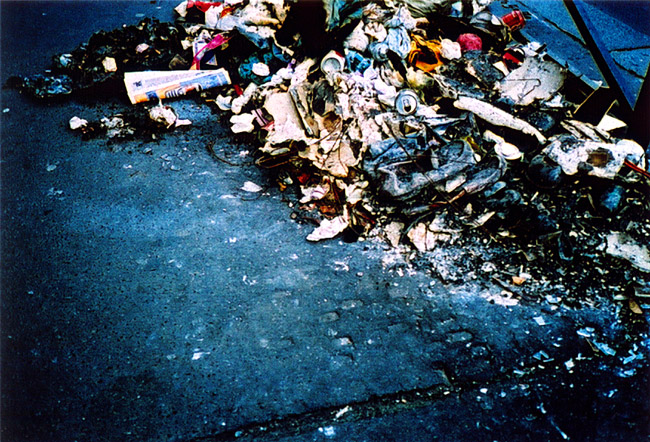
Trash Is In The Eye Of The Beholder

The French Quarter is finally being cleaned the way New Orleanians have been begging for years. And for that we can thank the guys who actually pick-up the trash.

The light-blue garbage can was full, but Cornelius Washington twirled it across the pavement like a 70-pound ballerina. From his gloves, the can danced to the back of a garbage truck at the edge of Canal Street, where Washington's younger colleague "T," Torreyon Davis, waited.

Davis reached out with one hand, flipped the can into the air upside down and tapped it against the truck, spilling its contents into the truck's big metal jaws. Then he flicked the empty can back to Washington.

The performance earned hoots from a group of college kids standing nearby, draped in flashing beads. "Did you see those garbage men?" said one, punching his friend on the arm. Washington raised a gloved hand in acknowledgment, then ran alongside the moving truck and hopped on.

Washington, who has ridden garbage trucks in New Orleans for 15 years, said that those kids must have lived a deprived childhood, one that didn't include garbage workers hefting cans across the street. Over the past few decades, many cities have moved to automated garbage collection, using trucks with metal arms that reach out to grab plastic trash bins. In those places, there's no need for hoppers, the guys who ride the back of the truck.

Other cities may still hire hoppers, but to Washington they seem lackluster. "They got a textbook thing," Washington said. "They stop the truck. They step off the truck. They pick up the can. They dump it. Then they put the can back down in that one spot."

But in New Orleans, where street crews have always prided themselves on their choreography, a new city garbage contractor is earning plaudits for its work. The best place to view these shows and the result of them is the French Quarter, where SDT Waste and Debris Service crews have been collecting garbage twice a day, seven days a week, since Jan. 1.

Almost overnight, French Quarter residents -- historically, not an easy bunch to please -- began raving about the tidiness of the Quarter. To some, however, SDT's first big test is Mardi Gras. Can they handle streets crammed with drunks, huge piles of garbage and sidewalks scattered with parade detritus? Will their work suffer?

Perhaps the people of SDT Waste and Debris Service can go down to Tulane and Broad to show the DA how to clean up the streets.

Tuesday, February 06, 2007

How Slow Can You Go?

The Road Home Program keeps promising to speed the process up, but the results are still unimpressive.

BATON ROUGE — The Road Home program continues to struggle to unspool money in the $7.5-billion homeowner aid program.

With 105,739 applications received to date and 74,571 appointments scheduled or held, officials say they are primed to increase the payout pace.

Benefits have been calculated 34,779 homeowners, which means they can agree to accept the money being offered, but just 532 homeowners have done so, including just 141 in the past week of the 19-week program. That's an average of 28 homeowners being paid per week

At this rate it'll take approximately 314 years to dole out all the money. Maybe I'll enter my pet snail in the next marathon and see who finishes first.

Thursday, January 25, 2007

Screw-Up, Move Up.

As the old saying in government goes, "screw-up, move up". New Orleans is want to prove that old maxim true.

If you've ever asked yourself, as you've watched the post-Katrina morass of incompetence and violence that has engulfed New Orleans, whether that city has suffered enough, you have your answer. And that answer is "no."

N'awlins, get ready for...the magical world of Lee P. Brown!

Brown, who was Atlanta's public-safety commissioner during a famously inept serial-murder investigation, who was New York's police commissioner during the ineptly handled Crown Heights riots, who was Houston mayor while the HPD crime lab was run...eptly? Guess again!...has been hired to solve New Orleans' massive violent-crime problem.

If his time here is any indication, Brown will implement a two-pronged attack. He will a) bore everyone to death, using content-less, cliché-filled, charisma-free speeches to put criminals into a stupor; and b) take a lot of taxpayer-funded out-of-town trips. We're sure Rome and London need to be studied closely for tips on how to stop Ninth Ward gangbangers.

Brown told the Louisiana Weekly that "there is no silver bullet that is going to say that this is going to be done tomorrow...Working together, you can get the job done."

We're kind of surprised Brown didn't mention making New Orleans "a world-class city," but it's still early.

New Orleans seems to be slightly underwhelmed by the announcement.

"I haven't a clue if this guy is going to do any good. I hope he does," said Spud McConnell, popular talk-show host at the city's WWL-AM. "Lord knows we've had enough people come over here, get a big paycheck for giving their opinion and then walking away."

CB Forgotston, a blogger who closely follows the crime wave at www.forgotston.com, also is skeptical. "In Louisiana, [it's not] that we lack plans...We don't need any more plans, frankly. I think what we lack in New Orleans is implementation and common sense," he says.

Forgotston, a lawyer and community activist, doesn't seem blown away by the dynamism that is Lee P. Brown: "He's going to take six months to study it, 'maximum.' And, you know, maximum always becomes a minimum. So my point is: How many people are going to die between now and the next six months, while we're waiting on a plan?"

We don't know, CB. But we do know that now when it happens, Lee Brown will be there with a platitude to make everything seem better.

Too bad The Three Stooges are deceased, I think I found a job for them. Just forget about the Governor's office. That job is taken.

Wednesday, January 17, 2007

Clean As A Whistling Dixie Beer

Last month I posted about the City Council pending rejection of the city's contract for trash collection in the French Quarter, CBD and Warehouse District. Well the contract has been approved and implemented and so far, if this article is accurate, most people appear to be happy with the results.

Just last month, French Quarter denizen Louis Sahuc was among the most vocal critics of the city's new trash-collection contract for the Quarter and the Central Business District, one of three new garbage deals that riled up residents across town for their hefty price tags and newfangled service enhancements that many derided as over the top.

But days into the contract's seven-year term, Sahuc is so impressed with the result that he has agreed to appear in a TV commercial for SDT Waste & Debris, the Chalmette-based contractor whose work in four downtown neighborhoods has left them tidier than many residents recall ever seeing.

That is not to say that the current arrangement does not have its critics, mainly with the requirement that residents us large refuse containers provided free by SDT.

Meanwhile, residents of the French Quarter and Central Business District have won a key concession from City Hall: After weeks of objections, at least some of them will not have to use the plastic trash bins that are designed to be lifted by mechanized arms on new garbage trucks.

Residents of those neighborhoods who say that the wheeled bins would be too big to store on their small lots or inside their apartments will be able to ask City Hall for an exemption from the cart requirement. Those who get excused will be allowed to put out trash in three-ply black garbage bags without facing fines.

Residents who don't get the dispensation will have to use the 32-gallon trash bins designated for downtown areas. Residents of most other neighborhoods will have to use 96-gallon bins.

Sanitation Director Veronica White said requests should be submitted by mail and will be evaluated on a "case-by-case basis." In a letter to French Quarter residents, she said exemptions will be approved for "residents who are disabled" or in cases where "the infrastructure does not allow for the storage of the roll cart."

Whatever the merit of the critics, I'm sure these issues will get ironed out over time. The time for trash talk is over and the time for picking it up is upon us.

Wednesday, December 06, 2006

The Road Home-less Program

Governor Kathleen Blanco's Road Home Program has been taking criticism from all directions due to the slooooowwww pace of distributing checks to flooded homeowners. Now, City Business has take up the task of tracking the rate of progress (or lack thereof) the the Road Home Program in making people whole.

Since last week, almost 2,000 homeowners have made their selections and mailed back their Benefit Option Letters to The Road Home. Since last week, almost 2,000 homeowners have made

However, just 56 of 85,256 applpicants have been paid. The average claim being paid totals $51,452.

Homeowners are marking their choices to stay in their homes, relocate to new homes in Louisiana or sell their homes and move out of state.

In November, The Road Home mailed more than 10,000 letters to homeowners, detailing their options and informing them of the award amounts for which they are eligible.

Upon receiving a homeowner’s letter, program officials are entering each homeowner’s response into the system and are compiling reports detailing the choices that homeowners are making. This information will be released as soon as it is available.

The Road Home is working to ensure that homeowners understand the content of their letters. Each homeowner who has received a letter will also receive a phone call from a program representative to answer any questions they may have about their awards or the closing process.

Some phone calls have already been made to applicants. Homeowners should carefully read the instructions contained within the letter when making their choice. Those homeowners with questions about their letters are encouraged to call The Road Home hotline at (888) ROAD-2-LA and choose prompt No. 6. Staffing at the call center is being increased on a daily basis to accommodate the expected influx of homeowner calls.

Since the program began sometime around early October, just 56 checks have been mailed. At that rate, all applicants should be made whole about 270 years from now. I understand that the wheels of government turn slowly, but this is ridiculous.

Friday, December 01, 2006

Takin' Out Da' Trash


The New Orleans City Council is set to vote for or against the city's contract for trash collection in the French Quarter, CBD and Wharehouse District.

The mayor's office chose SDT to handle around-the-clock trash pickup and street cleaning in the French Quarter, Central Business District and Warehouse District.
The article delves into the intricacies of the bidding process and the additional costs but what I'm sure most residents want to really know. To what extent will trash collection occur in these neighborhoods?

If the contract calls for the winning bidder to ensure that trash is collected on at least a daily basis and includes street and sidewalk cleaning, this is a good thing. One of the things that has limited progress in the city and hindered our recovery are the piles of garbage and debris in the street. No one likes to see a dirty city. And New Orleans is dirty. Visitors to the French Quarter have for years complained about the trash but have largely fallen on deaf ears. Now their complaints have gotten louder. Piggybacked with French Quarter business owners complaints about lack of business, politicians started listening.

If this is a good contract we may finally see a French Quarter in all its pristine beauty.

Thursday, November 30, 2006

Take This Job And Shove It

The commander of the Army Corps of Engineers New Orleans District is asking to be relieved of duty.

Col. Rich Wagenaar, who took the helm of the Army Corps of Engineers New Orleans District the month before Hurricane Katrina toppled the corps-built levee system in August 2005, has requested to step down as district commander and retire from the Army.
His absence will surely not be missed.

Monday, October 30, 2006

A Victim Of Coicumstance

[Curly is taking the oath]

Court Clerk: Take off your hat.

[Curly takes off his hat with his right hand]

Court Clerk: Raise your right hand.

[With his right hand, Curly puts his hat back on, and raises the hand]

Court Clerk: [gesturing to the book he is holding] Put your left hand here.

Judge: [to Curly] Take off you hat.

[Curly does so with his right hand]

Court Clerk: [to Curly] Raise your right hand.

[Curly puts his hat back on to raise the hand]

Court Clerk: [gesturing to the book he is holding] Now, put your left hand here.

Judge: [to Curly] Please, take off your hat.

[Curly does so with his right hand]

Court Clerk: [to Curly] Raise your right hand.

[Curly repeats the process]

Court Clerk: [gesturing to the book he is holding] Now, put your left hand here.

Judge: [to Curly] Will you please take off your hat?

[Curly does so with his right hand]

Court Clerk: [angrily, to Curly] Raise your RIGHT HAND.

[Curly repeats the process]

Court Clerk: [gesturing to the book he is holding] Now, put your left hand here.

Judge: [to Curly] Take off your hat.

[Curly takes off the hat and places it on his cane, which is in his right hand]

Court Clerk: [to Curly] Raise your right hand.

[Curly raises his cane with the hat on it]

Court Clerk: [taking the hat off the cane] Get rid of that hat.

[Curly takes the hat and puts it on the court clerk's head]

Curly: [with both hands on the book] Raise YOUR right hand.

[the court clerk does so, startles, takes the hat off, and places it under the book]

Court Clerk: Raise your right hand.

[Curly does so]

This scene from The Three Stooges "Disorder in the Court" is reminiscent of the kabuki dance between local courts, law enforcement, the district attorney and good government organizations. One of the problems with the justice system in New Orleans is the lack of open courts. Now the court system wont have that excuse rest on anymore.

For the first time since Hurricane Katrina, all 12 sections of Criminal District Court are back in operation today at the courthouse at 2700 Tulane Ave.

With the completion of most of the repairs of the courthouse’s storm damage, every section again has its own courtroom, so judges are no longer forced by lack of space to hear cases in weekly shifts of six. Since returning to New Orleans in early December, the judges have worked in shifts, first at U.S. District Court and, since early June, at the Tulane Avenue building.

Having all the judges back at work at the same time “will mean that at least we’ll be back up to the point of five or six jury trials in the same day,” Division E. Judge Calvin Johnson said before taking reporters inside the cavernous court building where huge temporary air conditioning ducts, in place as recently as Friday, had disappeared.

“It’s almost a miracle when you think in terms of what we’ve had to endure,” said Johnson, recalling how the judges and staffers, toting court records and computers, were evacuated from the flooded building by boat in early September and set up shop at Southern University in Baton Rouge.

Johnson said availablity of all the courtrooms is a giant step toward normalcy, but there are still some holes to be filled, among them a need for more people to serve on juries and more lawyers to represent indigent defendants.
Though I wouldn't hold my breath that New Orleans' crime problem will be solved anytime soon, if ever. The court system could end up being more like "Night Court" rather than "Perry Mason".