Thursday, February 02, 2006

No More Jumbo Shrimp, Just Plain Shrimp

Gov. Kathleen "Drew a" Blanco is urging the reduction of the size of New Orleans government. To give you an idea of how bloated city government is, get this:

New Orleans has seven assessors; other parishes have one each. There are also two sheriffs in Orleans Parish — one criminal and one civil — where other parishes have one sheriff. And there are many more instances where Orleans Parish has elected and appointed offices unique to itself.
Hopefully this will end the trend of city government getting bigger as the population shrinks. Bloated and expensive governement, confiscatory taxes, an uneducated workforce, high crime rates, extensive welfare rolls and corrupt government officials is no way to attract new businesses and expand the tax base. It is a good way to begin a long, slow death spiral.

If the agenda on the special session are approved, New Orleans may be on its way to a long recovery.

In a similar vein, the Boston Globe editorializes that the recovery effort is anemic at best and this some of Bring New Orleans Back Commission's priorities may be misplaced.
Finally, and bizarrely, the report spends as much space on a light rail system as it does on levees. One could easily get the idea that the best protection against future hurricanes for the federal government to spend $5 billion on light rail in New Orleans. Light rail systems almost never cover their costs, and they are almost always dominated by high speed buses on dedicated lanes.
The city needs to set priorties. Right now everything is being thrown into the mix. That gives us the ability to see what is available long term and short term. I think the Globe misses that. And that is what the Bring New Orleans Back Commission report did, throw everything into the mix and let residents decide what is more important and what is less. Unfourtunately, many residents missed that point too.

I think the priorities should be as such:
  1. Rebuild and strengthen the levees and improve flood control.
  2. Clean out the political institutions. We will never be able to get ahead with the current crop of politicians keeping the populace down.
  3. Financial assistance for those who lost their homes and business. The federal government is at fault for that and therefore should pay. Just like the private sector.
  4. Resonstruct the healthcare system. Tenet Healthcare has committed to rebuilding at least one of it's hospitals in the city.
  5. Streamline city government to a size appropriate to the population and the basic of needs of the citizenry. This includes the unincorporation of a large chunk of the city.
  6. Replace the education system. The old system is broke beyond repair. Already several schools have reopened as charter schools. This bodes well for the city.
  7. Upgrade the infrastructure. Water, sewer, power and communications need to be brought into the 21st century.
  8. Start thinking about ways to connect SE Louisiana with the rest of the Gulf Coast. Were all in this together and it is in all our best interests to rebuild in sync.
  9. Improve the transportation systems. The mass transit system was in workable order but there is room for improvement.
  10. City beautification. The historic areas of New Orleans have an inner beauty that cannot be taken away but we should not have to look hard to see it.
  11. Recreational facilities. This should include renovation of West End and City Park, recreation complexes such as soccer fields (City Park already has a few softball diamonds) or other green spaces where informal games could be played. But, if we do this, they must be well maintained or we should not do it at all. If we are successfull in the former endeavors, New Orleaneans will have more time for recreation.
  12. Better development of the lakefront. Previously this had been the playground of the Orleans Levee District. Now that it will probably go away sometime after the latest special session of the legislature, the city needs to work in conjunction with the new levee board to ensure that flood control does not have to come at the expense of New Orleans best assets.
Quite a dilema we have, thinking smaller while seeing the big picture at the same time.

Wednesday, February 01, 2006

Got Stung By A Hornet

The New Orleans Hornets will remain based in Oklahoma City for next season. There is a possibility that the team will return to the Crescent City for the 2007-2008 season.

Sports fans around New Orleans are beginning to show signs of "battered-wife syndrome. First, Tom Benson, owner of the Saints, toyed with the idea of moving to San Antonio, ony to lie about really wanting to return and then being basically ordered by the NFL to come back. Now were taking the same treatment from our other sports franchise.

Well, at least the Zephyrs still treat us like a lady.

Sid Mar's Falls On Its Sword

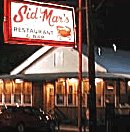
Sid Mar's Restaurant in Bucktown and Coconut Beach Volleyball Complex at West End will be sacrificed in order to construct a temporary floodgate and pumping station. While I have never been to Sid Mar's, other like it have been fequented many time my wife and I to enjoy the simple menus of fried seafood, generous portions and relaxed atmosphere.

Although I haven't played volleyball in ten years, I remember the summer our firm played in Coconut Beach's summer league like it was yesterday. June and July in New Orleans can be the epitomy of hot and humid, but having a couple of cold beers after a game of volleyball next to Lake Ponchartrain was never more pleasant.

Now they may never return but I'm going to be an optimist and await the day when each opens in a new location nearby.

While saddened by their loss Sid-Mar’s operator Kent Burgess is philosophical about it:

Burgess said he knows the greater good – the protection of life – has to take precedence over rebuilding the restaurant, but he said the thought hurts.

The whole area known as West End took a beating during Hurricane Katrina and before with other restaurants being lost or damaged during Hurricanes Georges and Ivan. The last storm devastated the area so much that it can only go up. Let's hope that West End is part of the rebuilding plan of New Orleans.

More about West End can be found at Wikitravel.

UPDATE: Graphic of proposed gate and pumps here. And it looks like the site for Coconut Beach will become available again.

Mississippi Building

According to the Providence Journal, the Mississippi will be rebuilding the old Gulf Coast anew. The article points out the conflict between the Modernists and the New Urbanists. This time the New Urbanists appear to have won out.

In contrast, the Mississippi charrette offers not just a great way to rebuild the Gulf Coast after Katrina; it offers all Americans a chance to re-acquaint themselves with what they have lost: the beautiful cities and towns that modernism everywhere has managed to destroy, starting half a century ago.

New Orleans is a case in point in that it never turned it's back on its historic roots, indeed, it imbraced it. Rebuilding New Orleans will not involve the kind of rebuilding going on in Mississippi, since we are not starting from scratch. We do need to be mindfull of those things that are repaired that they be done in a way that maintains the patina of the old city. It can't look too new or too slick. Distressed it good.

That's not to say we can't improve. The BNOB Commission rebuilding plan had some good ideas in expanding the streetcar lines and adding more green space (just not too much).

Also, the proposal to build a light rail connecting SE Louisiana with the rest of the Gulf Coast will be great for the region. With that visitors can experience the entire region instead of a particular town.

The City of New Orleans and the State of Louisiana have to get their act together and decide where they want to take our region. We're waiting.

Hat Tip: Veritas et Venustas.

Monday, January 30, 2006

You Want Fries Wit' Dat?

New Orleans restaurants are having to make adjustments to their business plans to aclimate to changes in the hospitility environment. But according to this article in City Business, local eateries are making due just fine. Cutting corners on expenses and instituting a more efficient operation, restaurant owners and managers have been able to more than offset the loss of customers.

If these new business plans continue, and business picks up over time, restaurants in New Orleans may be able to be model for doing business in the area. With increased profitability and a shortage of labor, we could see, in fact we are seeing, wages for restaurant employees increase while the quality and portions of local dishes remain high and the price remains low.

Kenny LaCour, owner of Restaurant Cuveé at 322 Magazine St. sums it up nicely:

"We’re looking at a business downturn in revenue, however, in our case, perhaps the profitability based on revenue is a little more sound than maybe it would have been a year ago," LaCour said. "The labor is more streamlined."

People have often said that Hurricane Katrina put a halt to the steady decline of New Orleans. What is unknown at this point is if Katrina will speed up that decline or reverse it. Let's hope that the restaurants of New Orleans are harbingers of things to come.

Wake Me Up Before You Go MR-GO

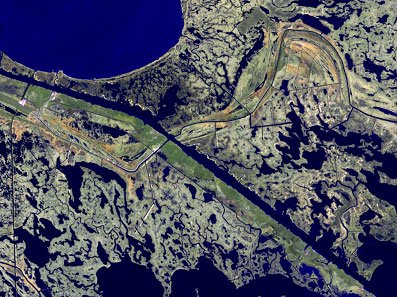
The MR-GO (Mississippi River - Gulf Outlet) is not very popular these days, In fact, it hasn't been popular for may years. Now residents of New Orleans East and St. Bernard Parish are teaming up to support the closing of the waterway.

MR-GO has always been controversial, it was even blamed for much of the flooding of St. Bernard Parish and the Lower 9th Ward during Hurricane Betsy in 1965. And with a repeat of that flooding from Katrina, MR-GO may finally go.

Sunday, January 29, 2006

Got Mustard Out?

Now that the "Baker Bill" is on life support, developers with deep pockets are descending into town with real estate agents in tow. They are all looking for good deals on flooded homes. While the market is offering opportunities for middle-income people to buy into neighborhoods otherwise out of their price range, these developers are upping the ante freezing out the locals.

I'm not sure if this is good or bad. It's probably both. I know the local's don't like being out bid by some young kid from out of state who has a rich daddy, but by investing their money into the region, the local's don't risk investing their money into property that may be surrounded by blighted property. I have no problem in developers thaking the risk. On the flip side, an individual wanting to buy, may also be interested in making modifications to suite their needs. With a developer, they'll have to settle with what he think the market wants.

My own concern is that these developers will rebuild without knowledge of the local flavor of the architecture of New Orleans and change the mosaic of house styles to something more akin to assembly-line architecture. If a suggestion could be made to these individual developers, don't purchase blocks of houses in close proximity to each other, spread out your work. This will allow different developers own style to be intermixed with others, thereby creating a different mosaic, but mosaic nontheless. Also, to local historians and organizations such as the HDLC or the Preservation Resource Center.

Friday, January 27, 2006

Hit The Road Jack, And Don't You Come Back No More

Newsmax.com is reporting that 80% of New Orleans blacks do not plan to return.

Professor John R. Logan, in findings released Thursday, determined that if the city's returning population was limited to neighborhoods undamaged by Katrina, half of the white population would not return and 80 percent of the black population would not return.

It has been bandied about since days after Katrina came ashore that New Orleans will be majority white in the future. While that may be true to some extent, it should not be as a result of actions by government entities or officials. This is what got Mayor "Willie Wonka" Nagin in such hot water because many white residents saw themsleves as being not welcome back. So far I have not heard anyone make statements to the effect that blacks should not come back to town. People have said that those who are not willing to work hard to rebuild the city, but they were mostly black.

In my opinion, New Orleans will be a lesser place if a large of portion of the black community does not come back. The culture of New Orleans has been greatly enhanced by their presence and efforts must be made to make sure that presence does not get washed away.

Thursday, January 26, 2006

The New Urbanists Are Coming, The New Urbanists Are Coming!

This Sun Herald article makes it sound like New Urbanists are decending upon the Mississippi Gulf Coast like a hoard of developers and Reed Kroloff is in full Paul Revere mode.

It's also stirred up a simmering backlash among other architects, who say New Urbanists, while correct in building denser cities where people can walk, produce a "one-size-fits-all" model that confines its solutions to the past and isn't open to new ideas.

"This is a very conservative, very waspy ideology," said Reed Kroloff, dean of the Tulane University School of Architecture and head of a New Orleans rebuilding committee. "There's no doubt that a fair amount of New Urbanist principles have found their way into the embrace of the American right... . They call themselves neo-traditionalists. Neo-traditionalists and neo-conservatives make a very happy marriage."


Now I don't know how Republicans enter the mix, and speaking as one, I have some reservations about imposing New Urbanis ideology into every community but some of their ideas could be usefull in rebuilding New Orleans. The trick is deciding which ideas work where.

While I do think that urban planners and architects should play a vital role in the rebuilding of the region, we should keep in mind that the people should be allowed to rebuild their own communities. Our role should be one of advising and suggesting possible solutions and let the citizens decide what they like. That doesn't mean we can't sell our ideas, but if people get the impression that we are imposing on them what we think their ideal community should be like, we will get the same reaction in New Orleans with the BNOB proposal.

But based on the article, some of the ideas sound pretty good such as changing HWY 90 to some kind of boulevard. I've been to the MGC (Mississippi Gulf Coast) many times but what really turns me off is the fact that if you stay in one of the beach side hotels, you have to play a real-life game of Frogger to get to the beach.

In New Orleans, architects and planners are talking about New Urbanism like it is the second coming. Again, some of their ideas in one manestifasion or another might improve neighborhoods but we need to sit down and figure out what people like about their neighborhoods and what they don't and try to keep the good and change the bad for the better.

New Orleans is not a small town, it is a city of neighborhoods and any successful urban plan will be one which maintains that neighborhood atmosphere, not create a mosaic of villages in the image of Seaside. Like when contractors try to change our design on the pretext that they did that design elswhere and it worked just fine, therefore it should work here. I don't need to tell you what my reply was.

Don't Say That!

Interesting quote from Veritas et Venustas:

"This is absolutely remarkable!" he said. "I never thought I'd see such ideas happen in this town in my lifetime. It's simply unbelievable. Here's the case for mixed-use, mixed-income, pedestrian-scale neighborhoods. For light-rail transit, for parks in every neighborhood, for protection of sensitive areas and covering canals for green space." Borah credits Paul Farmer, executive director of the American Planning Association, for telling New Orleans a sober truth Borah's preached for a lifetime: The city's master plan must have the force of law, or under-the-table deals will vitiate all the best development plans. And that's just what the report now recommends: a legally enforceable master plan.

Just don't mention eminent domain.