Saturday, March 11, 2006

Duh, We Didn't Know It Was Going To Do That

The Interagency Performance Evaluation Task Force has released it's report on the cause of the failures of the 17th Street Canal floodwall and the conclusion is that nobody could have known what was going to happen.

Quote:

Although independent analysts have blamed the 17th Street Canal failure on faulty engineering, including flawed soil investigations by local firms, the Interagency Performance Evaluation Task Force, composed of experts from academia and industry as well as state and federal agencies, said evidence points to forces that came together in a combination unique to the science and thus could not have been anticipated by the system's design teams.
This conclusion could only be reached if the faulty engineering is ignored. After all, how was the Corps of Engineers supposed to know that it's engineers were incompetent.

The draft report can be found here.

Hatfield & McCoys

Real Estate Investor does a profile of Joe Canizaro, whom some have likened to the "Donald Trump of New Orleans". The article starts out as mostly fluff but further down someone named Rosen describes the political atmosphere of New Orleans that is holding back recovery.

“The problem in New Orleans, more than anything, is that the political leadership seems to be very fragmented,� says Rosen. “Besides Joe Canizaro, I don't see anybody who has the energy, or the direction. They're just back and forth fussing about this and that, and the state doesn't agree with the city.�
However the article concludes with a positive note that private investors are addressing the housing problem by first identifying the needs and then locating areas that are prime for immediate redevelopment:
The targeted development zones are downtown, Algiers, Central City, the Almonaster Corridor and the Lower Ninth Ward.

And these targeted areas are big sites, generally on high ground, that are ripe for larger developments to spearhead the early stages of the recovery. “The Almonaster Corridor is a great example,� says Canizaro. “You've got some industrial, but you've got a lot of vacant land out there also, and it's a site that I think can be put together pretty easily.�
So it looks like private investors will lead the the recovery effort while our elected leaders act like the Hatfield and McCoys.

Thursday, March 09, 2006

Hourglass Architecture

corbusier at Architecture and Morality posts an essay on the "visual boredom of college campus'" that at least tangentally applies to New Orleans and its rebuilding process.

Yet the mere fact that it is all ‘beautiful’ still leaves out an important aspect that is vital for me to make a place enjoyable to be in—something I would call ‘possessing interest’. What is meant here is that I desire an environment to offer something unexpected, fascinating, ironic, embodying subtle tension. The liveliest urban environments in the city downtowns contain this in droves, in which each street, alley, and building reveals itself in unexpected ways. In such dynamic places, unlike buildings sit side by side, their juxtaposition suggesting all sorts of meanings. The contrasting building style on a busy city street document the passage of time quite vividly, each land plot containing a story of its own unlike those built for college purposes. Far from dissolving into this nondescript mass that serves to enhance the landscape, the heterogeneity of the urban block generate a sculptural cityscape, a hierarchy of masses and surfaces that give a community a unique visual identity.
The comment about "contrasting building style(s) on a busy city street document the passage of time" relates quite vividly to the architecture of New Orleans. Because New Orleans is such an old city and it's myriad of cultural influences, differing architectural styles can be found aplenty. This is what give New Orleans so much of its charm.

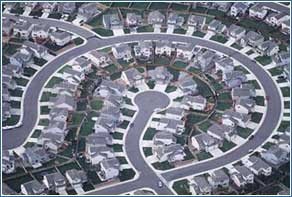
Now that lare tracts of land will be rebuilt, my fear is that neighborhood rebuilding will be funnelled through a single or few architects that will "yield an undesirable monotony".

We have to ensure that many people and many ideas be incorporated into the rebuilding process in order to avoid the effect of giving the city the atmosphere of a college campus and maintaining its character as a city.

Wednesday, March 08, 2006

This Old House

Witold Rybczynski over at Slate.com writes that our neighbor to the east is far and away ahead of Louisiana with its reconstruction efforts. He attributes this to several factors:

  1. Gulf Cost communities are smaller
  2. Mississippi evacuees are nearby rather than scattered asunder
  3. Economic recovery has been quicker
  4. Mississippi involved the citizens in redesigning their communities
He also answers many of the critcs of New Urbanism that their plans are not forward looking, and instead look back.
A Pattern Book for Gulf Coast Neighborhoods has been distributed free to residents as part of the rebuilding effort. The book illustrates details, materials, and forms that have traditionally been associated with local styles and demonstrates how these can be practically adapted to even mobile homes and manufactured housing—which will likely form the bulk of new houses. A chapter shows how typical Gulf Coast houses can be adapted to meet FEMA requirements. Four local styles are recommended: Acadian-Creole, Victorian, Classical, and Arts & Crafts. One looks in vain for such Gulf Coast perennials as Funky Beach Shack, '50s Googly Motel, or Down-and-Dirty Shopping Strip. Like most design guides, the Pattern Book is as much about taste as style. Whether it will succeed in turning the Mississippi coast into a Southern version of Santa Barbara remains to be seen.

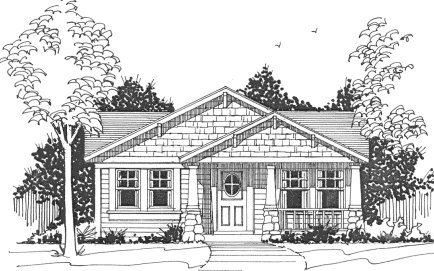
Critics of this approach—and so far there have been many—miss the point, however, when they use words like "historicism" and "nostalgia" and call for more cutting-edge designs. New urbanists aren't promoting tradition—they don't have to; American home-buyers made that decision years ago. They prefer houses with pitched roofs, clapboard siding, bay windows, and porches. Visit any subdivision in the country and you won't find any ersatz Frank Gehry or Rem Koolhaas knockoffs. Gehry's public buildings are popular, so are Koolhaas'. But most people prefer not to make a home in them.
The last two sentences reiterate what I've been saying for some time. That the traditional house that is so prevelent here is popular for a reason. The design responds well to the climate and is therefore familiar to their owners. There is no need to reinvent the wheel here. That does not mean that we can't improve upon it

There are a few ways that can be done:
  1. In low-lying areas, do away with the Ranch House and return to the Raised Cottage.
  2. Investigate new construction methods and materials.
  3. Improved building materials and finishes.
  4. Better energy efficiency.
  5. Electrical and communication systems that can accommodate 21st Century advances.
  6. See if we can find ways to bring back the "Old School" quality without the high labor cost.
  7. And please, can we get a reasonably priced residential window that looks like traditional wood and not a cheap knock-off?
Many of these issues have and are being addressed by Architects and researches as we speak. Others seem to evoke not interest at all.

One reason critics scoff at historicism is that the resulting product usually is just a cheap knock-off of the historic building they are trying the emulate. Historic building can be accurately mimicked but the problem lies in the exorbitant cost involved. And when the estimates come in, the fancy windows and stone details are the first to get valued engineered out.

Contractors and building suppliers need to find ways to bring back some of the "Old World" materials without the "New World" costs.

For example, wood windows. Many a home built before the '60's had wood windows. These were often leaky and not very energy-efficient and were more costly to manufacture. Manufacturers went to the extruded aluminum window. They are more efficient and cheaper to make. Unfortunately they look like shit. Companies like Pella and Jeld-Wen still make wood windows but they are mainly for the high-end user. I would like to see a vinyl-window manufacture come up with a design that has that "punch-out" look and raised mullions but using the modern manufacturing techniques we see today.

There should be no reason that the middle and lower-middle-class cannot enjoy a traditonal home without having to buy an old home.

PS - Witold Rybczynski's interview with NPR can be found here.

Hat Tip Veritas et Venustas.

Would You Trust These Guys To Build Your Levees?

That's the question people should ask when reading this article about the Corps of Engineers paying no attention to reports indicating that the levee system base on a fast Catagory 3 storm was inadquate.

Weather data showing the need to raise the height of levees to defend New Orleans against stronger hurricanes was not incorporated in Army Corps of Engineers designs, even though the agency was informed of the new calculations as early as 1972, government records show.
Their excuse was that Congress did mandate that higher storm-surge levels should be designed for. Now, I'm no expert on the mandate of the Corps of Engineers, but shouldn't these reports have raised red flags more work needed to be done? It appears not.
New Orleans District engineers now involved in reassessing the area's hurricane protection system said the lack of changes in the past probably can be traced the corps' legal restriction to building only what Congress authorizes.
But an LSU engineer says that Congress has no such such limitation on the Corps.

Ivor van Heerden, assistant director of the LSU Hurricane Center and a frequent critic of the corps, said the authorization issue should not have prevented the corps from changing design specifications based on updated information.

"The legislation never mentions a standard project hurricane. That was something the engineers came up with to define the most severe threat," he said. "There is no reason they could not have changed."

In 1965, Congress authorized the corps to develop a system to protect the New Orleans area from "the most severe meteorological conditions that are considered reasonably characteristic of the region," giving birth to the Lake Pontchartrain and Vicinity Hurricane Protection project.

So it looks like the Corps had a set of perameters that it felt comfortable with and simply moved-on. Like any other government entity, bureaucratic inertia simply took-over and no one had the initiative to make the Corps change it's ways. In the meantime, the Corps reassured the citizens of south Louisiana that all was safe regardless of the fact they didn't know what they were keeping us safe from.

Sointenly not Katrina.

Trash Talk

New Orleans still can't pick-up the trash in a timely manner but everyone involved is expert in knowing whome to blame.

The corps assumed the job to help the battered city after Katrina blew into town Aug. 29, but stopped curbside garbage pickup last month to return full time to its primary purpose: debris collection. City officials, in turn, handed the task over to Waste Management, the company that was contracted to pick up household garbage before the hurricane.

Faucheux said the company had begun handling pickup duties "in the teeth of the Mardi Gras season," when more trash tends to be generated. In addition, the company claims that the corps' contractors missed collections in some areas, leaving more trash for Waste Management to pick up.

A third logistical problem, according to Faucheux, is that Waste Management initially decided to use the routes established by the corps, but has since decided those routes are inefficient. New routes are being drawn up and a new pickup schedule should be announced soon, he said.
The city has known for six months that it will resume its responsibility for waste removal but is waiting only til now to figure out it will do so.

One wonders if Kimberly Williamson Butler is in charge of Sanitation also.

Tuesday, March 07, 2006

Teaching Nobody

The United Teachers of New Orleans are pushing the New Orleans School Board to hire back more of the teachers let go as a result of the city's evacuation.

Problem is, only about one sixth of the pre-Katrina students have returned to the city.

As unions are want to do, they are trying to get full employment for teachers even if those teachers are not needed.

Still unprepared for the coming hurricane season, and plagued by numerous other financial and structural problems, New Orleans has managed to get some of its schools in operation, but nowhere near enough as many to satisfy the United Teachers of New Orleans, which represents about 4,000 teachers who have been unable to return to work.

USA Today reports that the union has sued to force the city to open more schools.According to Louisiana officials New Orleans served 56,000 students before Katrina while today it's handling nearly 10,000 students with a capacity for 2,000 more.

That's not enough to satisfy the union whose leaders argue that by returning soon to a larger school district, ready or not, the city will be able to lure more citizens with a sense of normalcy, ignoring what constituted normalcy before Katrina when the city's schools were among the nation's worst.
The state is taking an unusually practical approach to reopening the schools in the city. As more facilities are needed, another school is refurbished and reopened as a charter school. The charter schools are a common-sense solution to the bare-bones staff manning the school board. Now, each school is responsible for its own curriculum and upkeep.

So far parents seem to be happy with this arrangement although the new media has not covered the new management of the parish schools since their reopening.

Let's hope that this trend continues and gets expanded upon. New Orleans best days may yet lie ahead. But not if the Teacher's Union has anything to do with it.

Monday, March 06, 2006

Follow Me, You Go First

Modernists architects are snippy about the New Urbanists getting all the attention in rebuilding the Gulf Coast. There are two reasons for this:

  1. The New Urbanists are taking the initiative in getting in touch with the residents, listening and making proposals. The Modernists, on the other hand, write articles in Artforum magazine about why New Urbanism is bad.
  2. Most people outside of NY and LA like what New Urbanism has to offer and think that Modernism is totally alien in their towns.
NOLA.com carries an aticle about Andres Duany's charette in Arabi. Local residents who participated in another charette are downright pleased.

Rebecca and Robert Young live in Abbeville. They hunt and fish avidly, so they are concerned about coastal erosion. Robert, an ophthalmologist, has an office downtown, so he was concerned about plans for the city's heart.

The couple attended the Vermilion Parish charrette.

"There was so much information," Rebecca Young said. "They spent a lot of time with local people. They ate the local gumbos. They went to church with us. They listened to what the people had to say."

Fact is, the Duany group sat down and listened to the residents. Opposite of what happened with the BNOB Commison proposal. Needless to say, New Orleaneans were not so receptive.

This whole dust-up between the New Urbanists and Modernists helps bring to light the philosophical differences of the two. The Modernists like to believe that it is they who have the vision to move society forward and should not be hindered by such things as market forces and popularity of the general public. The New Urbanists believe that the best architecture is that which responds best to these constraints This explains their two approaches.

John at Veritas et Venustas highlights this dichotomy where he describes the different types of clients.

(There are) different types of clients: the Patron, the Client, the Builder and the Buyer. The Patrons are the people who buy custom houses from Frank Gehry, sharing with Frank in the creation of a work of art.

The Client wants some of that process, but doesn't have the budget for a Gehry or Koolhaas building. Most young architecture practices get their work from Clients: if they succeed in becoming famous, they move up to having Patrons, with their almost unlimited support for the Starchitect and his budget.

The Builders build most new construction. Their budget is strictly controlled by their profit margin. Their architecture is governed by their market. Some Builders are also Patrons, but most view architects as a commodity no different from all the other consultants and contractors with whom the Builder negotiates.

The Buyer buys from the Builder. The architect rarely meets the Buyer. They Buyer is not a partner in the creation of a work of art. The Buyer is an unknown person who may move in 12 months, to be replaced by another Buyer.

The poor are buyers with no money and no leverage. They are the last people we should be experimenting on.

Unfortunately, despite all the comments on public process and the genuine desire to help, the academics at the symposium were unable to imagine any work other than "innovative" and "creative experiments" in the tradition of Pruitt Igoe.

The Modernists have clients yet want to be the Patron themself. The New Urbanists are reaching out to the Buyers and the buyers appreciate it. Ultimately this approach of interacting and listening to the local population will result in successful cities and hopefully no more Pruitt-Igoes.

Friday, March 03, 2006

It's A Treat To Beat Your Feet On The Mississippi Mud

According to this article in Time.com, developers are looking to high-rise condos and mixed -income housing developments along the Mississippi River. Just this week I noticed a banner advertising a new high-rise condo near the intersection of Tchopotoulis St. and Caliope St. in the Wharehouse District.

Urban planners have been saying for some time that New Orleans footprint should be reduced with higher density housing along the river. The density of the city is increasing along the river does appear to be increasing but because of market pressure and not government. The dearth of housing units in the city has attracted developers but they are not willing to invest in areas highly susceptable to heavy flooding.

Quote:

Developers, however, are clearly hoping hurricane-wary residents will take a look at neighborhoods nearer the city’s original roots—along the waterfront, where there was no flooding.
This is a logical reaction to the aftermath of Hurricane Katrina. What is ommited in the article are the ramifications of those homeowners wishing to rebuild or invest in flooded neighborhoods. Face it, not everyone want's to live five floors above street level and have your neighbor on the other side of a wall. People want choices and will find a way to get them, despite what others say.
"New Orleans has many historical neighborhoods with fantastic houses on high ground. We could make it richer architecturally on less land without displacing anybody involuntarily," says Kroloff. Downside? "People in New Orleans may have to trade their ranchburger lifestyle for an urban lifestyle," he says.
Well, Reed, what if some people don't want an urban lifestyle?

On a similar vein, the White House is putting strings on the CDBG for recovery efforts in New Orleans that properties bought-out by the federal government be done under the Stafford Act which says that property under this statue will forever in perpetuety not be allowed for development. As usual, the government is ignoring unintended consequences. If large portions of New Orleans is not allowed to be developed and significant economic growth occurs several things could happen.
  1. Areas of New Orleans not prohibited for development would see an increase in density resulting in less green space. Lack of green space is one cause of subsidence thereby lowering the elevations of the property relative to BFE (Base Flood Elevation).
  2. Moving development to the outlying parishes turning over existing wetlands to potential development which are even more in danger of storm surge.
  3. Large land areas owned by the federal government will have to be maintained and secured by the federal government. If no maintainence occurs, that is the removal all existing structures, utilities, streets, etc, these areas will become large wastelands. If no security is provided, pressure for low-income housing can result in these areas becoming havens for squatters and the resulting shanty-towns.
None of these results will be healthy for the city or it's inhabitants. When people and entities try to enforce their ideas upon the city, their blinders need to be removed. Let's not loose site of the forest for the trees.

Wednesday, March 01, 2006

Balancing Act

Elizabeth Mossop, Dean of the LSU School of Landscape Architecture, is interviewed by the Greater Baton Rouge Business Report discussing the impact of New Urbanism and urban planning in New Orleans.

One bit of dialogue that piqued my interest is this:

You and others have criticized the New Urbanist impulse toward historicist aesthetics, particularly for post-Katrina New Orleans. The concern is that would create an artificial city, where everything looks--

Mossop: Like Disneyland.

OK. But if you do not take inspiration from the French Quarter or the Garden District or Gentilly, what does the actual built environment look like? Does everyone have an avant-garde house?

Mossop: New Orleans is very different from most North American cities because it has this really powerful past. But the urban structure is more significant than the actual architectural fabric. These neighborhoods are so distinctive, and the urban pattern is quite dense. That gives your streets a certain feel and a critical mass of population so you end up with centers, shopping streets and certain types of public spaces. These places feel different from other urban areas. We should be using that. And in the same way, it has a fantastic architectural tradition, and there's no reason why contemporary housing can't respond to that. But that's not to say that new housing has to be of those old types. We might be looking to provide very different types of housing--more affordable, higher density. They might look completely different. There are instances where you would look to using sympathetic materials, looking at the way those building envelopes work and looking at the forms. But you don't have to recreate the same details--or do the same things with cheaper materials, which is what I think is on the cards.

I agree that, while it is important for new housing to maintain some semblance of the original context, historic homes do not have to be copied. It is important that those elements of the vernacular remain; such as front porches, roof overhangs, exposed raters tails are a nice detail, as well as some of the local adaptatations to the hot-humid climit of south Louisiana. These incude high ceilings, operable windows, cross ventilation and raised pier construction to address the persistant local flooding.

The other consideration that designers need to keep in mind is that New Orleans is not like many other cities where its architecture can be swapped with that of other cities. Can Seattle's Space Needle be swapped with the Chrysler Building in New York? Would St. Louis' Gateway Arch befit Los Angeles' skyline? Would Philip Johnson's Glass House feel welcome in New Orleans? I don't think so.

Case in point. Was the twin towers of the World Trade Center really compatatible with Manhatten's skyline? No. It stood out like a sore thumb. It drew attention to itself instead of enhancing the skyline as a whole.

So when designers contemplate new housing for rebuilding New Orleans, it behoves them to study and understand the local vernacular and why residents like it so much.

New Orleans has charm. Let's not loose it.